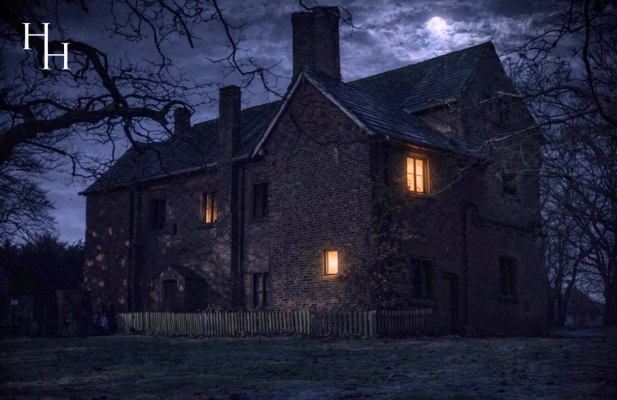
There has been property on this site since 1196 when the Bishop of Worcester divided the area into plots. The oldest remaining part of the Shrieve's House property dates back to 1470, with much of the remaining building rebuilt in 1595 following one of the fires.
The property consists of a private house (the oldest lived-in house in Stratford-Upon-Avon) and the large 500-year-old building to the rear that presently houses a museum depicting the property's sometimes chilling history.
The first known tenant of the building was William Shrieve in 1536, an archer to King Henry VIII. The house is still called 'The Shrieve's House', and it could therefore be reasonably assumed he was an important figure in his day and may
possibly have been a Sheriff of some sort, as his name suggests.
There have been several fires in the property, the most destructive of which occurred in 1595, after which the property would have been extensively rebuilt. The 1595 cobblestones are therefore the oldest surviving in Stratford-Upon-Avon and on which William Shakespeare himself would have walked on his way to the Three Tunns Tavern.
In the 16th century the property was a tavern and the tavern keeper, William Rogers, is said to have been some of the inspiration for Shakespeare's famous comic character Falstaff who appears in two of his plays. There is also documented evidence that his family had strong connections with Shakespeare, as Shakespeare's daughter Susannah was close friends with Elizabeth, the daughter of the Rogers; Shakespeare also left their nephew, William Walker, 20 shillings in his will. At this time the property would have consisted of not only the house but outhouses, a stable and a blacksmiths.
The property has also born witness to the plague in 1564 and again almost 100 years later.
During the mid 17th century, parliamentary Dutch mercenary soldiers were billeted at the property under Colonel Behr and the wounded brought back to a makeshift hospital after the first battle of the English Civil War at Edgehill in October 1642. The noise of battle is still said to be heard at the battlefield and it is said to be particularly active around Halloween and within Shrieve's House.
At the end of the 17th century one of the royalist residents, John Woolmer, became the first Mayor of Stratford and over the centuries three more mayors have lived here.
Also during this period a small cottage was attached to the end of the barn in what was referred to as 'the witch of Sheep Street's cottage' and is now the known as the witches courtyard. The local witches coven revere this area and still practice their ancient ceremonies there, particularly at Halloween.
The building is also said to be on some 5 laylines.
With almost 1000 years of history, and its history of plague, war, fire, witchcraft and, somesay, murder. Perhaps it would be more surprising if it were not haunted!
"Many people have lived and died in The Shrieve's House since the house was built in the mid-1250s. But for some reason, the people who died there seem to hang around as ghosts. If you want to see/feel/smell a ghost then go there because it is probably the most haunted house in England" (Terry Deary, author)
There are a number of 'dominant' spirits said to be active in the property: an archer from the time of Henry VIII; a serial murderer from the 18th century; a little girl who was a pickpocket in the tavern; a Catholic gentleman from the time of the reformation and a justice of the peace who used his power to run an extortion ring with threats, violence and trumped up charges. There are also sightings of the parliamentary soldiers (although it is more common to experience their injuries); the victims of the serial murderer; children and animals. During certain times of year a dark hooded figure with red glowing eyes, who is said to be a very ancient spirit, stands back and watches.